
PC-Conrend® RM
Polymer-modified, structural grade repair mortar
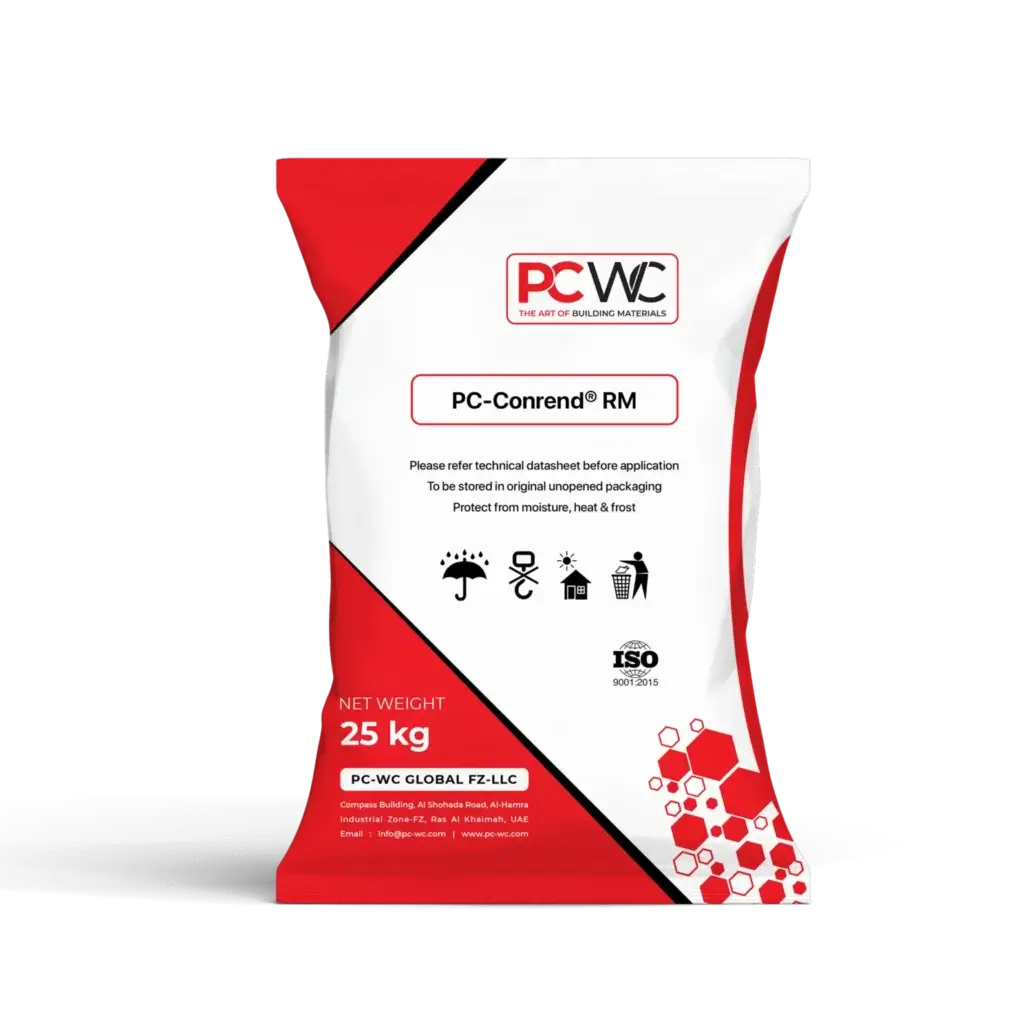
PC-Conrend® RM is a pre-mixed, polymer-modified, fiber-reinforced cement mortar that is free from corrosive substances, making it ideal for both interior and exterior applications. This product boasts abrasion resistance, excellent substrate adhesion, water impermeability, and streamlines construction processes. Classified as a PCC R3 mortar type for concrete repairs in accordance with EN 1504-3, it holds Certificate Nr: 2032-CPR-10.11.
FEATURES
- Utilization of the dry spraying technique.
- Possesses low shrinkage and low E-modulus, in addition to being chloride-proof.
- Demonstrates high resistance to carbonation.
- Resistant to high temperatures, frost, and de-icing salt.
- Structurally verifiable.
- Non-flammable and categorized as Building Material Class A1 per EN 13501-1.
- Categorized as Class R4 per EN 1504 part 3.
USES
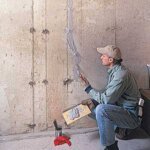
PC-Conrend® RM is a prime material choice for structural repairs that require a thickness exceeding 10-12 mm, whether for vertical or horizontal applications. It is well-suited for both manual and mechanized structural repair systems. This versatile material finds its utility in various applications, including extensive repairs on beams, columns, and other critical structural elements, as well as the restoration of structural elements exposed to recurring loads.
SURFACE PREPARATION
All remnants of concrete, mortar, dust, grease, oil, etc. must be completely removed. Damaged or contaminated concrete should be removed to expose the aggregate surface. Utilize non-impact/vibrating cleaning methods like grit or high-pressure water blasting. The repair edges should be cut vertically to a depth of at least 5 mm. Ensure all exposed reinforcement is cleaned to a minimum SA 2 grade following ISO 8501-1 / ISO 2944-4 standards. Clear the back of the rebar from contaminants as well. If corrosion is detected on reinforcing bars, cut back the concrete by at least 20mm behind them. Use grit blasting to remove corrosion products around the bars and then coat with PCConrend®ZRP to prevent further corrosion. If the diameter of the reinforcing bars is reduced by over 20% after grit blasting, consider replacing the affected section with guidance from the project’s structural engineer.
After completing the necessary preparation steps outlined above, the concrete surface is now ready for repair and restoration. When applying new concrete, make sure it is of high quality and compatible with the existing structure to ensure long-lasting results. Properly place and compact the fresh concrete to achieve a smooth and uniform finish.
MORTAR PLACING
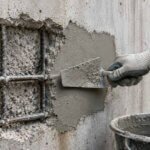
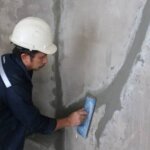
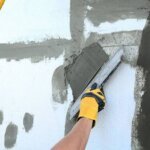
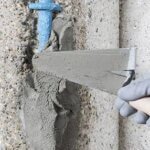
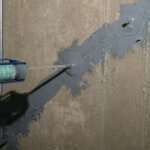
The product requires adherence to specified minimum temperatures both during application and for a minimum of 24 hours post-application to ensure optimal curing. It is recommended to presoak the prepared substrate, ideally for 24 hours, but a minimum of 2 hours before applying PCConrend®RM. The substrate should be adequately dampened, achieving a saturated surface dry state without any pooling water. Application of PCConrend®RM can be done via spray or manual methods. The mixed product is to be directly applied onto the prepared damp substrate or onto a primed surface while still wet. Using appropriate pressure during spraying is essential for ensuring strong material adhesion. To enhance adhesion, especially in manual application, a thin scrape coat or contact layer should precede the application to the desired thickness of 12 to a maximum of 50 mm, leveled using a screeding bar, trowel, or wooden board. Thicker applications are suitable for smaller patches or areas with additional reinforcement. Finishing touches such as smoothing with a trowel or using a float or sponge can be performed as the mortar begins to set. For added protection, subsequent coatings like Master Protect anti-carbonation barriers or silane impregnations should be applied as per individual recommendations.
Ensuring the proper application of PC-Conrend®RM is crucial for its optimal curing and performance. Preparing the substrate by maintaining specified temperatures and pre-soaking it for the recommended duration will set a solid foundation. Whether applying the product through spray or manual methods, the key is to achieve good adhesion by applying the mixed product onto a dampened substrate or a primed surface.
When spraying, remember that the right pressure is essential for a strong bond. For manual applications, consider using a thin scrape coat or contact layer before applying the product to the desired thickness. Smoothing and leveling the mortar with tools like a screeding bar, trowel, or wooden board will ensure a uniform finish.
DOWNLOADS


AREA OF APPLICATION